

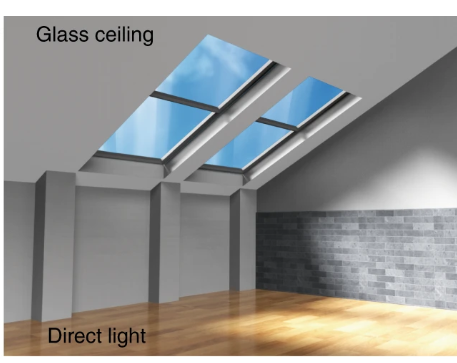
A scalable aesthetic transparent wood have been fabricated by engineers for energy efficient buildings.
Researchers in the fields of materials science and engineering, majorly from University of Maryland and others from Switzerland have recorded a major breakthrough, by transforming wood into a very beautiful, , tough and transparent energy saving building material. The result of their research was published on the 31st of July, 2020 in the journal Nature Communications.
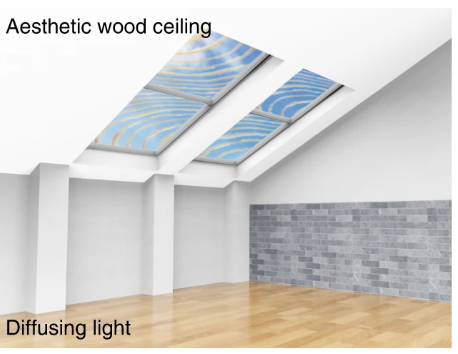
In their abstract, they stated that “Nowadays, energy-saving building materials are important for reducing indoor energy consumption by enabling better thermal insulation, promoting effective sunlight harvesting and offering comfortable indoor lighting. Here, we demonstrate a novel scalable aesthetic transparent wood (called aesthetic wood hereafter) with combined aesthetic features (e.g. intact wood patterns), excellent optical properties (an average transmittance of ~ 80% and a haze of ~ 93%), good UV-blocking ability, and low thermal conductivity (0.24 W m−1K−1) based on a process of spatially selective delignification and epoxy infiltration. Moreover, the rapid fabrication process and mechanical robustness (a high longitudinal tensile strength of 91.95 MPa and toughness of 2.73 MJ m−3) of the aesthetic wood facilitate good scale-up capability (320 mm × 170 mm × 0.6 mm) while saving large amounts of time and energy. The aesthetic wood holds great potential in energy-efficient building applications, such as glass ceilings, rooftops, transparent decorations, and indoor panels”.
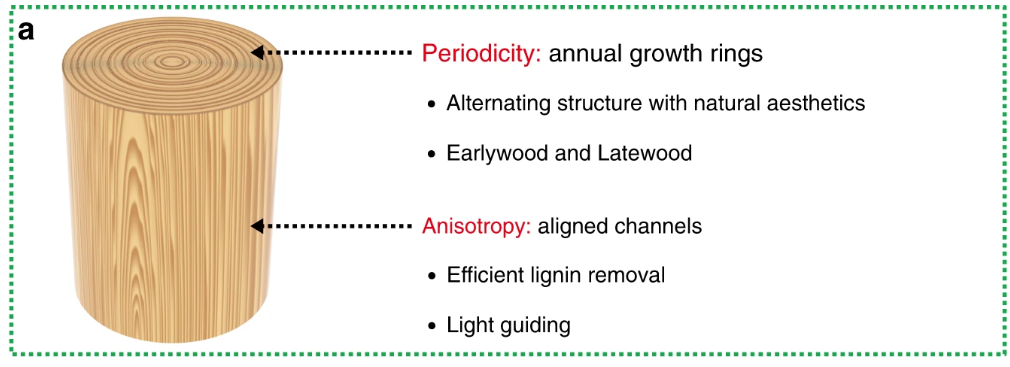
An indication of the design which combines the periodicity (annual growth rings) with anisotropy (aligned channels) of wood to realize a new kind of transparent wood composite. b Schematic to display the procedures for fabricating aesthetic wood (aesthetic wood-R) from natural wood with vertically aligned cells and annual growth rings after fast spatially selective delignification and polymer infiltration. c, e The cross-sectional SEM images of natural wood and dense aesthetic wood-R microstructures after polymer filling (there is a sharp boundary between EW and LW). d, f Photos to show a large piece of aesthetic wood-R (86 mm × 86 mm × 2 mm) with preserved wood patterns and high average transparency (80% at 600 nm) derived from Douglas fir.
Title of article: Scalable esthetic transparent wood for energy efficient buildings
Contributing authors: Ruiyu Mi, Chaoji Chen, Tobias Keplinger, Yong Pei, Shuaiming He, Dapeng Liu, Jianguo Li, Jiaqi Dai, EmilyHitz, Bao Yang, Ingo Burgert & Liangbing Hu
Journal information: Nature Communications (2020). DOI: 10.1038/s41467-020-17513-w

