

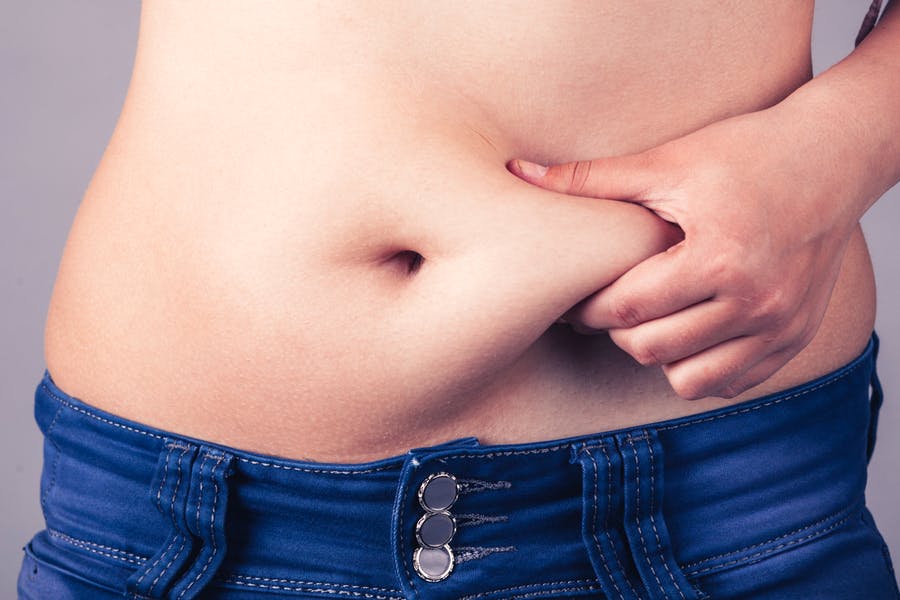
Research shows that excess body fat increases your risk for several cancers, including colorectal post-menopausal breast, uterine, esophageal, kidney and pancreatic cancers.
What’s less clear is exactly how being obese increases that risk. Experts believe it’s largely due to the inflammation caused by visceral fat – the fat that surrounds your vital organs. Source: MD Anderson cancer centre.
“The problem with excessive visceral fat is that it affects certain processes in your body. This includes how your body manages hormones, like insulin and estrogen,” says Karen Basen-Engquist, Ph.D., professor in Behavioral Science at MD Anderson.
“All of this can lead to an increased cancer risk by affecting how and when cells divide and die,” she says.
How does obesity cause inflammation?
Visceral fat cells are large, and there are a lot of them. This excess fat doesn’t have much room for oxygen. And that low-oxygen environment triggers inflammation.
Inflammation is the body’s natural response to injury and disease. For example, when you get a deep cut, the area around the cut becomes red and painful to touch. This minor inflammation around the wounded area helps repair the damaged tissue and aids with the healing process.
But long-term inflammation caused by excess visceral fat can damage your body and increase your risk for cancer.
Cancer happens when cells reproduce uncontrollably, damaging the cells around them and causing illness. The more cells divide and reproduce, the higher the risk that something will go wrong and a tumor will form.
Inflammation and insulin
The link between inflammation and insulin – the hormone that regulates blood sugar – is complex, Basen-Engquist says.
Inflammation caused by obesity can keep the body from properly responding to insulin. This is called insulin resistance. When the body doesn’t respond to insulin correctly, it produces more insulin to make up for that.
The increase in insulin due to insulin resistance triggers an increase in the number of cells produced, which can lead to cancer.
“Increased insulin also affects how hormones like estrogen are controlled,” says Basen-Engquist. “More insulin can lead to more available estrogen, which increases cancer risk.”
How does more estrogen increase cancer risk?
“Basically, higher estrogen levels lead to increased cell production, which could result in tumor growth,” Basen-Engquist says.
Estrogen is necessary for the body to function. In women, the ovaries are the main source of estrogen. In men, an enzyme converts testosterone to estrogen. But fat cells in both men and women can also make estrogen. This is why too much estrogen is commonly seen in obese people.
In women, too much estrogen is linked to an increased risk for post-menopausal breast, endometrial and ovarian cancers.
Cancer and obesity: What you can do?
One of the most important things you can do to decrease your cancer risk is maintain a healthy weight, Basen-Engquist says.
There are steps you can take to prevent obesity.
- Stay active. Aim for 150 minutes of moderate activity or 75 minutes of vigorous activity a week.
- Eat a healthy diet. Fill at least 2/3 of your plate with non-starchy vegetables, fruit, whole grains or legumes (beans and peas), and 1/3 or less with animal protein.
- If you drink alcohol, limit yourself to one drink per day if you are a woman, and two per day if you are a man.
- Get plenty of rest. Fatigue can make you want to eat more, and make unhealthy choices.
Being obese or overweight hurts your body’s ability to work well, Basen-Engquist says. Maintaining a healthy weight is essential for reducing your risk for cancer.

