

A new study has found that measuring “good” cholesterol in a different way may predict the chances of stroke or heart attack more accurately.
Some researchers argue that a different way of measuring ‘good’ cholesterol could be more helpful in assessing the risk of cardiovascular events.
The Centres for Disease Control and Prevention (CDC) highlight that heart disease is the leading cause of death among almost all groups of people in the United States; 1 in 4 deaths in the country result from this type of illness.
Although there are ongoing debates about the relationship between cholesterol and heart health, the CDC distinguish between good and bad cholesterol.
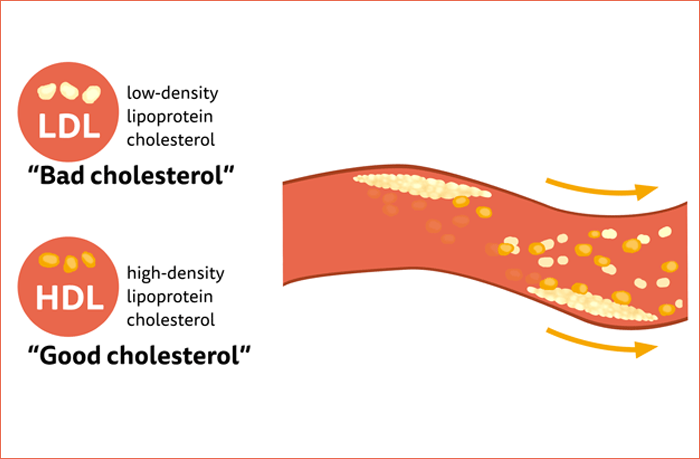
Good cholesterol is better-known as high-density lipoprotein (HDL) cholesterol. Cholesterol travels through the body on lipoproteins, and this type brings cholesterol to the liver, which then removes it from the body.
Bad cholesterol is called low-density lipoprotein (LDL) cholesterol. This is the main type, and the medical community believes that it increases the risk of cardiovascular issues, such as heart attacks and strokes.
When there is too much LDL in the body, it can collect to form plaques in blood vessels. This raises blood pressure, which increases the risk of serious cardiovascular disease.
Increased amounts of HDL, on the other hand, are associated with a lower risk of cardiovascular disease.
Now, new research suggests that an alternate way of measuring HDL may more accurately predict the risk of heart attacks and strokes.
The team behind the findings, published in the journal Circulation, also notes that neither the traditional nor the new measure showed any strong association between HDL cholesterol levels and heart attack among Black participants.
Different Ways of Measuring HDL
Traditionally, HDL levels are measured by determining the total amount of cholesterol being carried by HDL particles.
However, recent research has suggested that measuring the number of particles of HDL (HDL-P), rather than the total amount of cholesterol that the particles carry (HDL-C) may be a better way of determining the association between HDL and cardiovascular diseases.
The authors of the present study wanted to develop this research further to see the differences in the abilities of the two measures to predict cardiovascular disease.
They also wanted to test whether being Black or white made any difference to the relationship between HDL and the risk of cardiovascular issues.
According to Dr. Anand Rohatgi, an associate professor and preventive cardiologist at the University of Texas Southwestern Medical Center, “Previous studies have looked at HDL levels in the population as a whole.”
“But we know that sometimes biology differs by gender and race, so we thought it was important to separately tease apart what’s happening in those populations, as well as how HDL is associated with stroke, which has been understudied,” he adds.
This article was published in Medical news today and written by Timothy Huzar on July 1, 2020 — Fact checked by Catherine Carver, MPH.

