

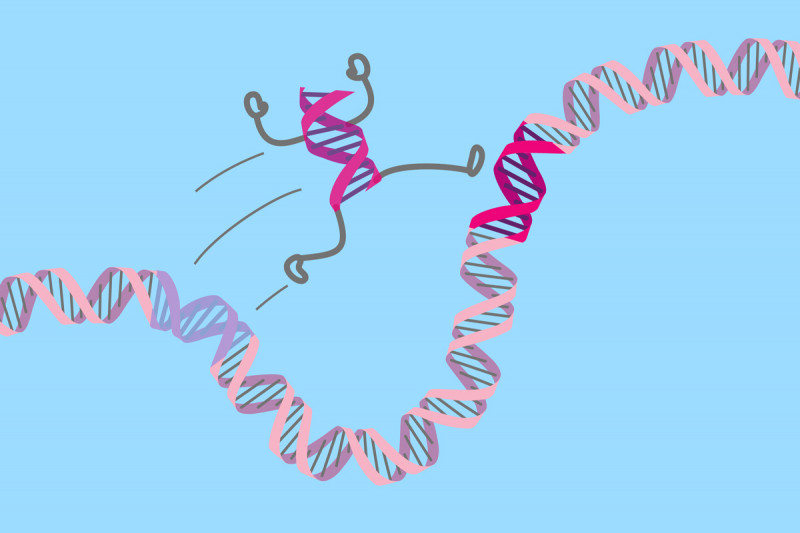
Jumping genes make up over half of our DNA and move around the genome controlling how our genes are used.
Professor Dónal O’Carroll at the University of Edinburgh, led a team of researchers who studied the development of germ cells in mouse embryos to understand the biological pathway that protects them from jumping genes.
The study is the first to reveal the role of the SPOCD1 protein, which helps to recruit protective chemical tags, known as DNA methylations, to disable jumping genes.
Scientists have long puzzled over how germ cells escape damage during the reprogramming process, as it temporarily wipes their genetic slate clean of existing protective tags.
“The identification of SPOCD1 finally opens the doors to further investigation that will give a more elaborate understanding of this elusive process and male fertility.” says O’Carroll.
Tests in male mice revealed that loss of this protein leads to infertility because the DNA methylation process does not happen correctly, allowing jumping genes to damage the developing sperms’ DNA.
Jumping genes make up over half of our DNA and move around the genome controlling how our genes are used. But their activity needs to be carefully regulated to avoid them causing damage.
The team discovered that early sperm’s secret line of defence is activated when SPOCD1 binds with another protein, known as MIWI2, which is already known to have a role in silencing jumping genes.
Our results give the first mechanistic insights into a process that is fundamental to sperm cell development and their genetic integrity.” says O’Carroll.
The findings not only explain the missing part of the puzzle that allows developing sperm to escape an early death, but also could provide insights into certain forms of infertility.
The study, published in Nature, was funded by Wellcome and the European Union’s Horizon 2020 programme. It also involved researchers from the Universities of Cambridge, Paris and Berlin.

