

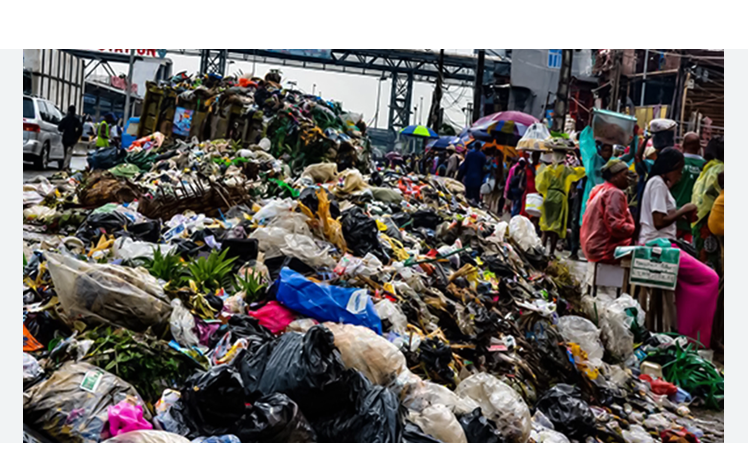
For years, heaps of refuse have been an unavoidable part of life in Lagos.
From blocked drainage channels to overflowing dumpsites and the familiar smell of decomposing waste, residents have often experienced the city’s waste problem at street level.
Now, the Lagos State Government is planning a major shift — turning some of the waste choking the megacity into energy, compost and other useful materials.
The government, through the Lagos Waste Management Authority (LAWMA), says it will gradually phase out ageing landfills and replace them with material recovery facilities and waste-to-energy plants as part of a broader plan to modernise waste management in the state.
LAWMA Managing Director, Muyiwa Gbadegesin, disclosed the plan during the agency’s mid-year media parley in Lagos, explaining that some existing dumpsites are already approaching the end of their operational lives.
The challenge has become particularly visible during the rainy season, when flooding affects access roads and disposal platforms, slowing down the movement of waste trucks and worsening pressure on already stretched landfill capacity.
From rubbish to resources
Under the new approach, waste would no longer simply be collected and buried. Instead, it would be sorted and processed so that materials such as organic waste, plastics, metals and textiles can be recovered and reused.
LAWMA is developing material recovery facilities in Ikorodu and Badagry, each covering about 50 hectares. According to the agency, roughly half of the waste stream is expected to be organic material that can be converted into compost for farmers and gardeners, while plastics can be recycled into products such as waste bins.
The state is also planning additional waste-to-energy facilities, including one in Badagry. The projects are expected to take at least three to five years to complete, with planning already underway.
An earlier plan announced by LAWMA also identified Epe as the location for a major waste-to-energy plant capable of processing about 3,000 tonnes of waste daily. The project forms part of a wider 5-to-10-year investment programme aimed at improving waste collection, treatment and disposal across Lagos.
What it could mean for ordinary Lagosians
For residents, the biggest question is simple: Will this finally mean less rubbish on their streets?
The answer could depend on how effectively the new infrastructure works alongside improved waste collection and enforcement.
LAWMA says it is already increasing collection capacity, with 150 additional compactor trucks expected by the end of 2026. The agency is also reforming the Private Sector Participation scheme, which currently involves 438 operators covering 377 wards across the state.
The proposed system could also create opportunities beyond cleaner neighbourhoods. Recycling, waste sorting, compost production, energy generation and the maintenance of new facilities could create jobs while turning materials previously regarded as useless into economic resources.
There is already a small-scale example of what this could look like at the Ikosi Fruit Market in Ketu.
There, spoiled pineapples and watermelons that once ended up in waste heaps are being processed in an anaerobic digester to produce biogas and organic fertiliser. The biogas is used for market lighting, cooking and phone-charging businesses.
For some traders, the impact has been tangible. One phone-charging operator told Channels Television that he previously spent between ₦15,000 and ₦20,000 daily on petrol for his business but has reduced his costs since the renewable-energy system was introduced. Food vendors have also reported savings on cooking fuel.
The Ikosi project also produces between 24 and 28 kilowatt-hours of electricity daily, while its leftover digestate is converted into bio-fertiliser.
A cleaner Lagos — if the system works
Lagos generates an estimated 13,000 to 20,000 metric tonnes of waste every day, according to recent reporting on the state’s waste challenge. Much of the organic material eventually ends up in landfills, where it decomposes and releases methane.
The state’s new strategy is therefore aimed at moving away from the traditional model of collect, dump and forget toward a circular system in which waste is sorted, recovered, recycled, composted or converted into energy.
But for the average resident, the success of the plan will ultimately be measured in very practical terms: fewer overflowing waste bins, cleaner streets, less foul odour, fewer blocked drains and a neighbourhood that feels healthier and safer.
Lagos says that transformation is already being planned. The challenge now is turning the plans into infrastructure that ordinary residents can see and feel in their daily lives.

