

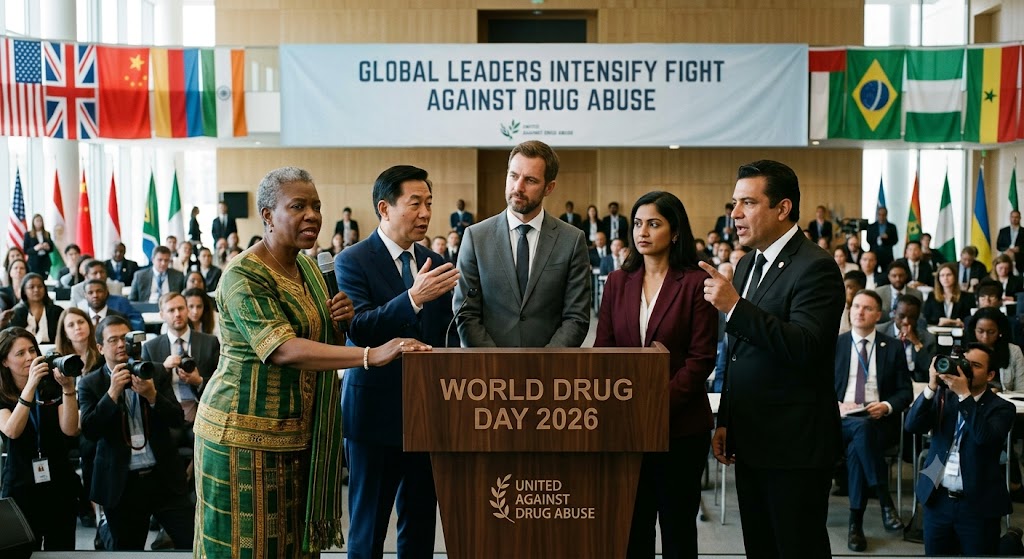
Every year on June 26, the world unites to observe World Drug Day, officially known as the International Day Against Drug Abuse and Illicit Trafficking, renewing a global commitment to combat the rising threat of illicit drug use and transnational drug trafficking.
Governments, health institutions, civil society organisations and communities across the globe marked this year’s observance with fresh appeals for stronger international cooperation, expanded access to prevention and rehabilitation services, and tougher measures against criminal networks driving the illegal drug trade.
Established by the United Nations General Assembly in 1987, World Drug Day serves as a global platform to raise awareness about the far-reaching consequences of drug abuse on individuals, families and societies while promoting coordinated action to reduce both the demand for and supply of illicit drugs.
The 2026 campaign comes at a time when the global drug landscape is rapidly evolving. The increasing production and circulation of synthetic drugs, the emergence of online drug marketplaces and the growing use of digital technologies by organised crime groups have created new challenges for governments and law enforcement agencies worldwide.
In his World Drug Day message, United Nations Secretary-General António Guterres warned that illicit drug trafficking continues to fuel violence, insecurity and instability in many parts of the world. He called for stronger international collaboration, enhanced law enforcement partnerships and greater investment in technology to counter increasingly sophisticated trafficking operations.
Guterres also stressed that the fight against drugs should extend beyond enforcement by embracing compassionate, evidence-based policies that prioritise prevention, treatment, recovery and social reintegration for people affected by substance use disorders.
The annual observance also coincides with the release of the 2026 United Nations Office on Drugs and Crime (UNODC) World Drug Report, which provides a comprehensive assessment of global trends in drug production, trafficking and consumption. The report highlights emerging threats while offering practical recommendations to help governments strengthen public health systems, disrupt criminal networks and improve international cooperation.
Across continents, countries commemorated the day through public awareness campaigns, anti-drug marches, school outreach programmes, community engagement activities and educational seminars aimed at discouraging substance abuse, particularly among young people.
In Nigeria, government agencies, educational institutions, civil society groups and community organisations intensified anti-drug advocacy campaigns as authorities continue efforts to reduce substance abuse and curb illicit drug trafficking. These initiatives focus on prevention, youth education, rehabilitation and community participation as critical pillars in addressing the country’s growing drug challenge.
Health experts continue to warn that drug dependence remains a significant public health issue with far-reaching consequences, including mental health disorders, family disintegration, rising crime rates and declining economic productivity. They maintain that early intervention, sustained public education and accessible treatment services remain among the most effective tools for reducing drug-related harm.
As the world marks another World Drug Day, stakeholders are urging governments to strengthen border security, dismantle trafficking networks, invest in rehabilitation services and deepen international partnerships to confront the evolving global drug crisis and safeguard future generations from the devastating impact of illicit drugs.

