

Four scientists from Imperial college London, Institute of stem biology USA and UCB pharma UK have just discovered a new GPI-anchored tumor suppressor.
On Monday the 29th of June 2020, a reviewed article was published by springer nature in the journal of cancer gene therapy, describing how tumors can be suppressed, using a GPI-anchored tumor suppressor. The article is titled: Emerging roles for the GPI-anchored tumor suppressor OPCML in cancers. The contributing authors are Jane Antony, Elisa Zanini, James R. Birtely, Hani Gabra and Chiara Racchi. A brief description of the process is as follows:
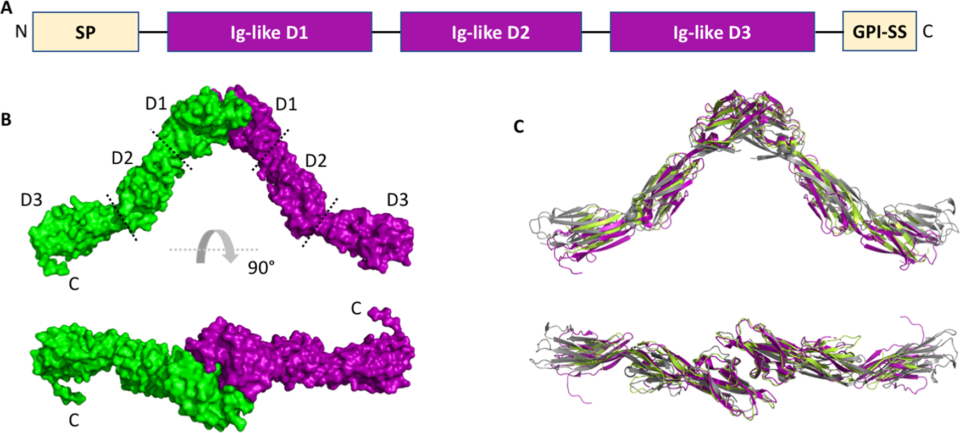
OPCML is a highly conserved glycosyl phosphatidylinositol (GPI)-anchored protein belonging to the IgLON family of cell adhesion molecules. OPCML functions as a tumor suppressor and is silenced in over 80% of ovarian cancers by loss of heterozygosity and by epigenetic mechanisms.
OPCML inactivation is also observed in many other cancers suggesting a conservation of tumor suppressor function. Although epigenetic silencing and subsequent loss of OPCML expression correlate with poor progression-free and overall patient survival, its mechanism of action is only starting to be fully elucidated.
Recent discoveries have demonstrated that OPCML exerts its tumor suppressor effect by inhibiting several cancer hallmark phenotypes in vitro and abrogating tumorigenesis in vivo, by downregulating/inactivating a specific spectrum of Receptor Tyrosine Kinases (RTKs), including EphA2, FGFR1, FGFR3, HER2, HER4, and AXL.
This modulation of RTKs can also sensitize ovarian and breast cancers to lapatinib, erlotinib, and anti-AXL therapies. Furthermore, OPCML has also been shown to function in synergy with the tumor suppressor phosphatase PTPRG to inactivate pro-metastatic RTKs such as AXL.
Recently, the identification of inactivating point mutations and the elucidation of the crystal structure of OPCML have provided valuable insights into its structure-function relationships, giving rise to its potential as an anti-cancer therapeutic.

